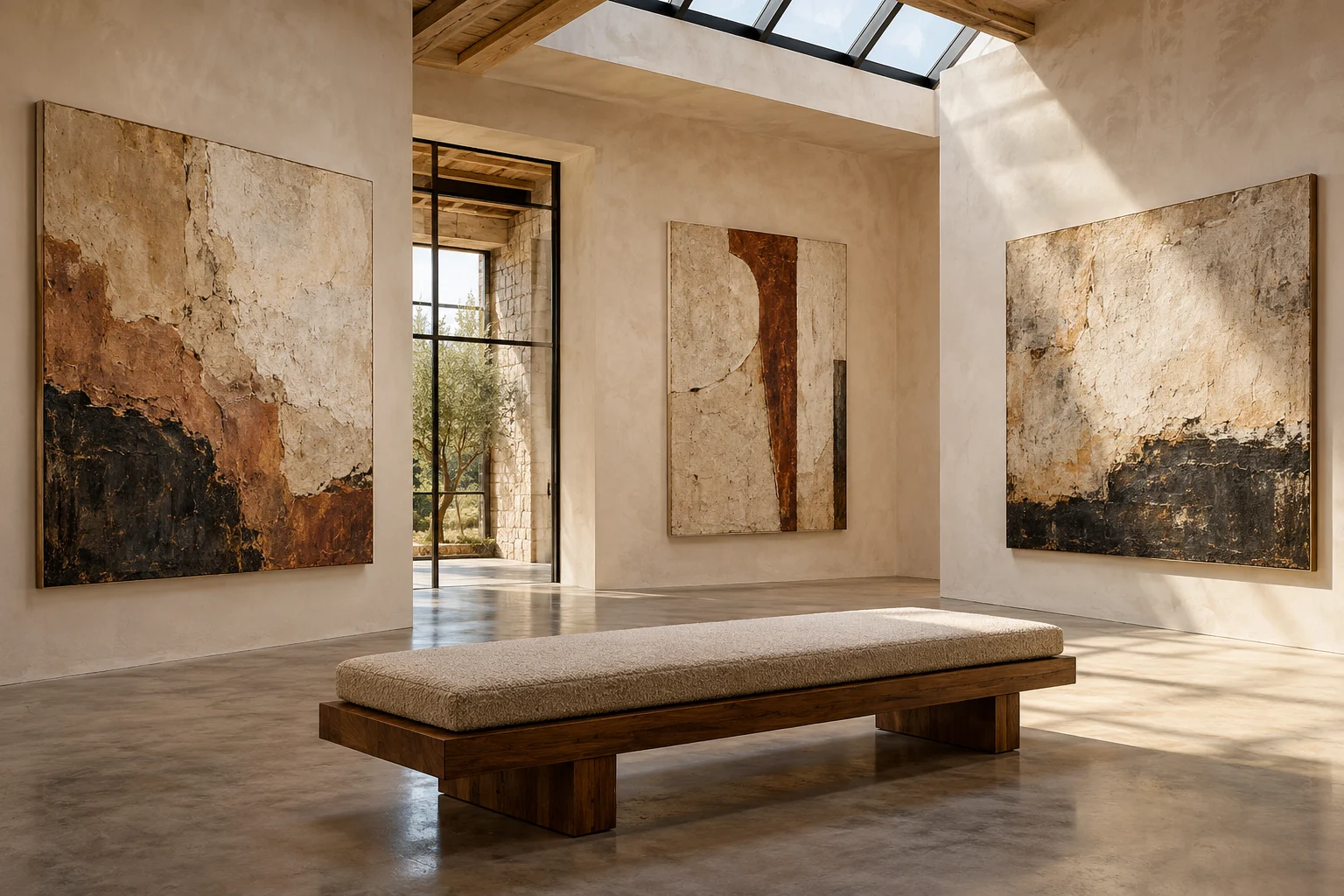
A heavy canvas hangs against a white wall, dominated by thick, jagged strokes of ochre and deep violet. From a few feet away, the texture looks like dried earth, almost tactile. There is a tension in the way the colors collide, a sense of movement that pulls the eye toward the lower left corner. This is the immediate, visceral response—the way the work hits the senses before a single word is read on a nearby placard.
The Gap Between Sight and Statement
Often, the next step in viewing art is turning to the small printed card that accompanies the piece. This text might explain that the violet strokes represent a specific period of grief or a particular landscape in a distant country. While these details provide context, they exist alongside your initial observation. The ochre still looks like earth to you, even if the artist describes it as a metaphor for sunlight. The value of the experience lies in navigating the space between what the creator says the work is and what you actually feel when standing before it.
Recording Your Own Perspective
For those who visit galleries frequently, a challenge arises: how to keep a record of these encounters that remains useful and understandable months or years later. It is easy to jot down a quick note, but those fragments can become cryptic over time. A decision record for your personal collection or even just a journal of experiences should capture the distinction between your sensory reaction and the provided explanation.
For example, if you are deciding whether to support a local artist or purchase a print, your notes might reflect a conflict. You might write that a piece feels energetic and bright, yet the artist’s description focuses on themes of isolation. This tension is a meaningful data point for your future self. If you only record the artist's intent, you lose the memory of why the piece originally caught your eye.
Balancing Intuition and Information
Choosing how to engage with a new exhibition involves a tradeoff. You can lean heavily into the historical and biographical details provided by the gallery, which offers a structured understanding, or you can lean into your own intuition, which offers a personal connection. Relying solely on the provided text can sometimes flatten the experience, making the art feel like a puzzle to be solved rather than a visual encounter. Conversely, ignoring the context entirely might mean missing the specific cultural nuances the artist worked to convey.
When you find yourself standing before a piece that sparks a strong reaction, consider what specific visual elements triggered it. Was it the scale, the temperature of the colors, or the direction of the brushwork? By noting these concrete observations alongside the formal descriptions, you create a more resilient memory of the visit. To build a meaningful record, ask yourself which details felt undeniable and which parts of the artist's explanation felt like they required a leap of faith.