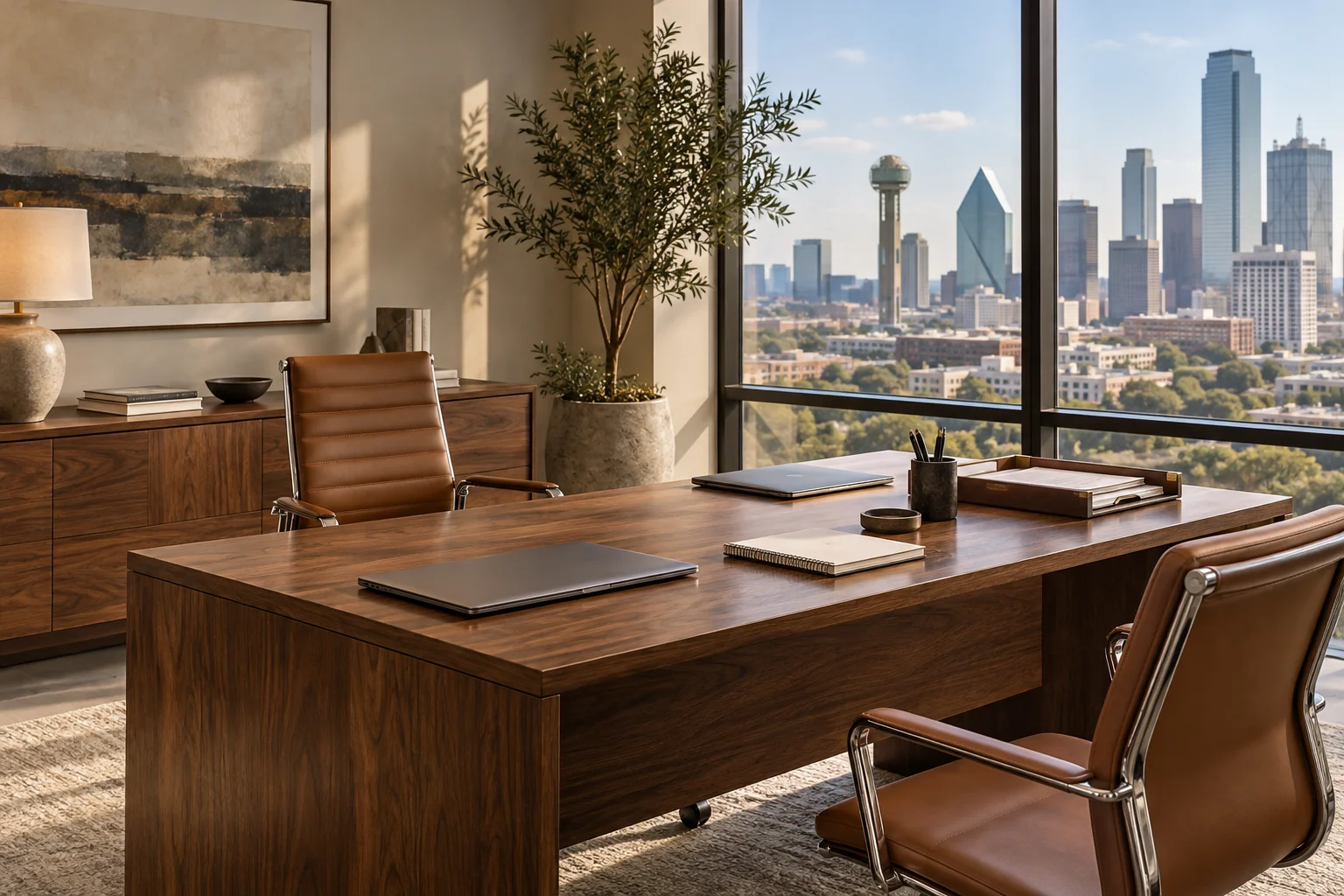
A photograph on a screen offers a clean, static view of a hand-planed walnut dining table or a live-edge coffee table. For a Dallas resident looking to refresh a living space, these digital galleries are often the first stop in finding something more distinctive than mass-produced showroom inventory. However, the distance between admiring a grain pattern online and seeing that piece settle into your specific dining room involves a series of practical considerations that a high-resolution image cannot convey.
The Distance Dilemma
Selecting a custom maker while you are not physically present in their workshop requires a shift in how you evaluate quality. When you cannot walk through the shop to observe the sawdust on the floor or the tools on the bench, you must rely on the clarity of their communication. You are not just buying wood; you are buying a specific interpretation of your measurements and aesthetic preferences.
For example, if you are looking at a minimalist sideboard to fit a narrow hallway in your home, the digital image might show the piece in a spacious, well-lit studio. This visual context can be deceptive. You might find that the scale of the piece in your actual environment feels different than it did on your monitor. This creates a tradeoff: you gain a piece tailored to your exact dimensions, but you lose the ability to physically test the height, the weight of the drawer pulls, or the way the finish reacts to the specific afternoon light in your room.
Bridging the Visual Gap
To manage this distance, look for how a maker describes their process. A detailed response about how they select timber or how they handle joinery can be more telling than a polished marketing slogan. Instead of looking for claims of perfection, look for a commitment to the specifics of your request.
Ask the maker how they handle the documentation of the build process. Would they be willing to send progress photos of the piece as it takes shape? Knowing whether they can provide close-up shots of specific joints or the texture of the finish can help mitigate the uncertainty of remote purchasing. You might also ask how they suggest verifying the final dimensions before the piece is crated and shipped to your door.
Securing the Final Details
The transition from a digital inquiry to a confirmed order involves understanding the logistics of arrival. A beautiful piece is only successful if it arrives intact and fits the intended space. Ask the maker about their preferred method of transport and how they package items to prevent movement during transit. It is also useful to inquire about their policy regarding minor adjustments if the piece arrives and does not sit level on your specific flooring.
When you are ready to move forward, focus on the details that connect the workshop to your home. By asking about progress updates, dimension verification, and delivery protection, you turn a remote transaction into a collaborative project. This approach ensures that the piece you receive is the one you envisioned, regardless of how many miles lie between your front door and their workbench.


